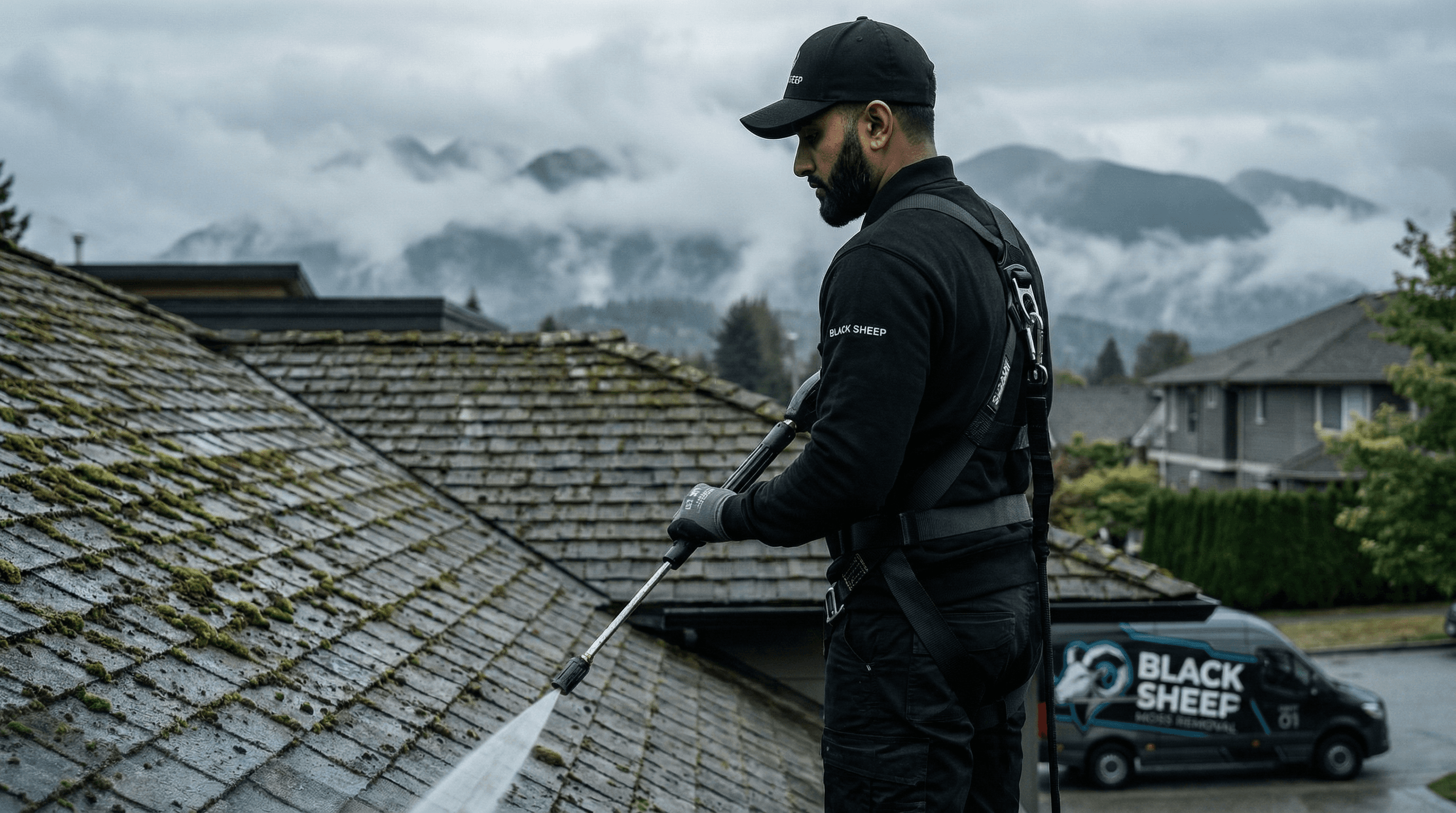
Moss removal in Vancouver B.C., and the danger to homeowners

Moss removal in Vancouver B.C., and the danger to homeowners

Written by

Avatar of author

Ammar Ghori

The dangers of moss on your roof top, homeowners beware!

The dangers of moss on your roof top, homeowners beware!

The dangers of moss on your roof top, homeowners beware!

In this post:

In this post:

In this post:

Section

Section

Section

The Green Gunk Gang:Moss as a Threat to BC Homes

Moss, algae, and lichen pose a significant threat to homes in damp, coastal climates like Vancouver, Surrey, and Delta, BC, due to constant moisture, mild temperatures, and shady conditions. This seemingly innocuous growth can lead to substantial damage and costly repairs if left unaddressed.

1. The Silent Destroyer: Damage Inflicted by Moss


🏠Roof Rot & Premature Demise

Moss traps water, lifts shingles, and allows roots to penetrate, significantly reducing roof lifespan.

💧Leaks & Water Intrusion

Moss roots create pathways for water to seep under shingles, leading to attic damage and mold growth.

🍂Clogged Gutters

Moss debris accumulates in gutters, causing water overflow and damage to walls, foundations, and basements.

🌡️Increased Energy Consumption

Moss impedes roof ventilation and insulation, forcing heating and cooling systems to work harder.

⚠️Slippery Surfaces

Moss on walkways, patios, and driveways creates hazardous conditions, increasing fall risks.

📉Reduced Curb Appeal & Value

A moss-covered roof signals neglect, negatively impacting home marketability and value.


Over 60%

of coastal BC homeowners have experienced issues with moss.

2. Historical Tactics & Their Drawbacks


🔨Scraping & Brushing

Brute-force approach that frequently removed shingles and their protective granules, shortening roof life.

💦Pressure Washing

High-pressure water jets could damage roofing materials and force water into the structure, leading to leaks.

🧪Harsh Chemicals

Early solutions like chlorine bleach and sulfur compounds were effective but damaging to roofs, plants, and the environment.


A Turning Point: Evolution of Care

A critical shift occurred in the late 1990s as the unintended consequences of destructive methods became clear. ROTban™ emerged in 1998, championing gentler, long-lasting solutions. By the early 2010s, specialized companies began offering non-pressure chemical cleaning, a technique proven effective in the US, setting the stage for modern, safer approaches.

3. Modern Solutions: Removal & Prevention


🧼Soft Washing

Low-pressure water combined with eco-friendly solutions to kill moss at its root without roof damage.

🖐️Hand-Picking

Manual removal of larger moss clumps ensures no damage to sensitive roofing materials.

🌱Eco-Friendly Solutions

Biodegradable, hydrogen peroxide-based, or plant-derived products safe for families and pets.

🛡️Preventative Treatments

Long-lasting treatments reactivate with rain to inhibit future moss growth, often with warranties.

➡️Gutter Cleaning

Essential for ensuring proper drainage and preventing future moss and water accumulation.


DIY vs. Professional: A Crucial Choice

While DIY options like diluted vinegar, baking soda, or hydrogen peroxide exist, professionals caution against them due to potential risks, inconsistent effectiveness, and environmental impacts. Homeowner concerns persist regarding roof damage from improper methods and the safety of chemicals, emphasizing the importance of choosing reputable, insured professionals.

4. Controversies & Environmental Concerns


🚨The Abbotsford Tide Pod Scandal (2021)

A company was fined $8,900 for using 290 kg of laundry detergent on a condo roof, highlighting the dangerous misuse of household products and lack of environmental consideration.

☠️Chemical Pollution & Ecosystem Harm

Harsh chemicals like copper sulfate, zinc, and chlorine bleach are toxic to aquatic life, kill plants, and harm ecosystems. Household soaps can also disrupt waterways.

🌬️Air Pollution & Health Risks

Volatile Organic Compounds (VOCs) and other harmful substances can be released. Bleach can weaken roofs and irritate respiratory systems.

🚫BC Government Advisories & Illegal Pollution

The government advises homeowners to read labels, ensure product approval for Canada, and never allow chemicals to enter storm drains or waterways, which constitutes illegal pollution.


Universal Condemnation of Pressure Washing

Across the industry, experts universally advise against high-pressure washing for roof cleaning due to the significant and often irreversible damage it causes to roofing materials and the underlying structure.

5. The Future of Moss Control


🔬Enhanced Bio-Formulations

Development of highly effective yet environmentally benign chemical solutions for sustainable moss control.

🤖Smart Home Moss Detectors

Sensors that alert homeowners to early signs of moss growth, potentially triggering automated treatments.

🚁Drone Technology

Drones equipped for precise application of eco-friendly mists to hard-to-reach areas, improving safety and efficiency.

🏗️Moss-Proof Roofing Materials

Innovation in new materials inherently designed to repel moss, algae, and lichen, offering long-term prevention.

🌿Intentional Moss Gardens

A niche trend exploring coexistence: cultivating moss in shaded areas where it does not pose a structural risk, embracing natural growth.

In conclusion, moss is a significant threat to the longevity, safety, and value of homes in coastal BC. While past removal methods were often damaging, modern approaches emphasize safe, effective, and professional solutions. The future promises intelligent, eco-friendly, and preventative strategies to combat this persistent issue, ensuring greener homes in every sense.
The Green Gunk Gang:Moss as a Threat to BC Homes

Moss, algae, and lichen pose a significant threat to homes in damp, coastal climates like Vancouver, Surrey, and Delta, BC, due to constant moisture, mild temperatures, and shady conditions. This seemingly innocuous growth can lead to substantial damage and costly repairs if left unaddressed.

1. The Silent Destroyer: Damage Inflicted by Moss


🏠Roof Rot & Premature Demise

Moss traps water, lifts shingles, and allows roots to penetrate, significantly reducing roof lifespan.

💧Leaks & Water Intrusion

Moss roots create pathways for water to seep under shingles, leading to attic damage and mold growth.

🍂Clogged Gutters

Moss debris accumulates in gutters, causing water overflow and damage to walls, foundations, and basements.

🌡️Increased Energy Consumption

Moss impedes roof ventilation and insulation, forcing heating and cooling systems to work harder.

⚠️Slippery Surfaces

Moss on walkways, patios, and driveways creates hazardous conditions, increasing fall risks.

📉Reduced Curb Appeal & Value

A moss-covered roof signals neglect, negatively impacting home marketability and value.


Over 60%

of coastal BC homeowners have experienced issues with moss.

2. Historical Tactics & Their Drawbacks


🔨Scraping & Brushing

Brute-force approach that frequently removed shingles and their protective granules, shortening roof life.

💦Pressure Washing

High-pressure water jets could damage roofing materials and force water into the structure, leading to leaks.

🧪Harsh Chemicals

Early solutions like chlorine bleach and sulfur compounds were effective but damaging to roofs, plants, and the environment.


A Turning Point: Evolution of Care

A critical shift occurred in the late 1990s as the unintended consequences of destructive methods became clear. ROTban™ emerged in 1998, championing gentler, long-lasting solutions. By the early 2010s, specialized companies began offering non-pressure chemical cleaning, a technique proven effective in the US, setting the stage for modern, safer approaches.

3. Modern Solutions: Removal & Prevention


🧼Soft Washing

Low-pressure water combined with eco-friendly solutions to kill moss at its root without roof damage.

🖐️Hand-Picking

Manual removal of larger moss clumps ensures no damage to sensitive roofing materials.

🌱Eco-Friendly Solutions

Biodegradable, hydrogen peroxide-based, or plant-derived products safe for families and pets.

🛡️Preventative Treatments

Long-lasting treatments reactivate with rain to inhibit future moss growth, often with warranties.

➡️Gutter Cleaning

Essential for ensuring proper drainage and preventing future moss and water accumulation.


DIY vs. Professional: A Crucial Choice

While DIY options like diluted vinegar, baking soda, or hydrogen peroxide exist, professionals caution against them due to potential risks, inconsistent effectiveness, and environmental impacts. Homeowner concerns persist regarding roof damage from improper methods and the safety of chemicals, emphasizing the importance of choosing reputable, insured professionals.

4. Controversies & Environmental Concerns


🚨The Abbotsford Tide Pod Scandal (2021)

A company was fined $8,900 for using 290 kg of laundry detergent on a condo roof, highlighting the dangerous misuse of household products and lack of environmental consideration.

☠️Chemical Pollution & Ecosystem Harm

Harsh chemicals like copper sulfate, zinc, and chlorine bleach are toxic to aquatic life, kill plants, and harm ecosystems. Household soaps can also disrupt waterways.

🌬️Air Pollution & Health Risks

Volatile Organic Compounds (VOCs) and other harmful substances can be released. Bleach can weaken roofs and irritate respiratory systems.

🚫BC Government Advisories & Illegal Pollution

The government advises homeowners to read labels, ensure product approval for Canada, and never allow chemicals to enter storm drains or waterways, which constitutes illegal pollution.


Universal Condemnation of Pressure Washing

Across the industry, experts universally advise against high-pressure washing for roof cleaning due to the significant and often irreversible damage it causes to roofing materials and the underlying structure.

5. The Future of Moss Control


🔬Enhanced Bio-Formulations

Development of highly effective yet environmentally benign chemical solutions for sustainable moss control.

🤖Smart Home Moss Detectors

Sensors that alert homeowners to early signs of moss growth, potentially triggering automated treatments.

🚁Drone Technology

Drones equipped for precise application of eco-friendly mists to hard-to-reach areas, improving safety and efficiency.

🏗️Moss-Proof Roofing Materials

Innovation in new materials inherently designed to repel moss, algae, and lichen, offering long-term prevention.

🌿Intentional Moss Gardens

A niche trend exploring coexistence: cultivating moss in shaded areas where it does not pose a structural risk, embracing natural growth.

In conclusion, moss is a significant threat to the longevity, safety, and value of homes in coastal BC. While past removal methods were often damaging, modern approaches emphasize safe, effective, and professional solutions. The future promises intelligent, eco-friendly, and preventative strategies to combat this persistent issue, ensuring greener homes in every sense.

The Green Gunk Gang:Moss as a Threat to BC Homes

Moss, algae, and lichen pose a significant threat to homes in damp, coastal climates like Vancouver, Surrey, and Delta, BC, due to constant moisture, mild temperatures, and shady conditions. This seemingly innocuous growth can lead to substantial damage and costly repairs if left unaddressed.

1. The Silent Destroyer: Damage Inflicted by Moss


🏠Roof Rot & Premature Demise

Moss traps water, lifts shingles, and allows roots to penetrate, significantly reducing roof lifespan.

💧Leaks & Water Intrusion

Moss roots create pathways for water to seep under shingles, leading to attic damage and mold growth.

🍂Clogged Gutters

Moss debris accumulates in gutters, causing water overflow and damage to walls, foundations, and basements.

🌡️Increased Energy Consumption

Moss impedes roof ventilation and insulation, forcing heating and cooling systems to work harder.

⚠️Slippery Surfaces

Moss on walkways, patios, and driveways creates hazardous conditions, increasing fall risks.

📉Reduced Curb Appeal & Value

A moss-covered roof signals neglect, negatively impacting home marketability and value.


Over 60%

of coastal BC homeowners have experienced issues with moss.

2. Historical Tactics & Their Drawbacks


🔨Scraping & Brushing

Brute-force approach that frequently removed shingles and their protective granules, shortening roof life.

💦Pressure Washing

High-pressure water jets could damage roofing materials and force water into the structure, leading to leaks.

🧪Harsh Chemicals

Early solutions like chlorine bleach and sulfur compounds were effective but damaging to roofs, plants, and the environment.


A Turning Point: Evolution of Care

A critical shift occurred in the late 1990s as the unintended consequences of destructive methods became clear. ROTban™ emerged in 1998, championing gentler, long-lasting solutions. By the early 2010s, specialized companies began offering non-pressure chemical cleaning, a technique proven effective in the US, setting the stage for modern, safer approaches.

3. Modern Solutions: Removal & Prevention


🧼Soft Washing

Low-pressure water combined with eco-friendly solutions to kill moss at its root without roof damage.

🖐️Hand-Picking

Manual removal of larger moss clumps ensures no damage to sensitive roofing materials.

🌱Eco-Friendly Solutions

Biodegradable, hydrogen peroxide-based, or plant-derived products safe for families and pets.

🛡️Preventative Treatments

Long-lasting treatments reactivate with rain to inhibit future moss growth, often with warranties.

➡️Gutter Cleaning

Essential for ensuring proper drainage and preventing future moss and water accumulation.


DIY vs. Professional: A Crucial Choice

While DIY options like diluted vinegar, baking soda, or hydrogen peroxide exist, professionals caution against them due to potential risks, inconsistent effectiveness, and environmental impacts. Homeowner concerns persist regarding roof damage from improper methods and the safety of chemicals, emphasizing the importance of choosing reputable, insured professionals.

4. Controversies & Environmental Concerns


🚨The Abbotsford Tide Pod Scandal (2021)

A company was fined $8,900 for using 290 kg of laundry detergent on a condo roof, highlighting the dangerous misuse of household products and lack of environmental consideration.

☠️Chemical Pollution & Ecosystem Harm

Harsh chemicals like copper sulfate, zinc, and chlorine bleach are toxic to aquatic life, kill plants, and harm ecosystems. Household soaps can also disrupt waterways.

🌬️Air Pollution & Health Risks

Volatile Organic Compounds (VOCs) and other harmful substances can be released. Bleach can weaken roofs and irritate respiratory systems.

🚫BC Government Advisories & Illegal Pollution

The government advises homeowners to read labels, ensure product approval for Canada, and never allow chemicals to enter storm drains or waterways, which constitutes illegal pollution.


Universal Condemnation of Pressure Washing

Across the industry, experts universally advise against high-pressure washing for roof cleaning due to the significant and often irreversible damage it causes to roofing materials and the underlying structure.

5. The Future of Moss Control


🔬Enhanced Bio-Formulations

Development of highly effective yet environmentally benign chemical solutions for sustainable moss control.

🤖Smart Home Moss Detectors

Sensors that alert homeowners to early signs of moss growth, potentially triggering automated treatments.

🚁Drone Technology

Drones equipped for precise application of eco-friendly mists to hard-to-reach areas, improving safety and efficiency.

🏗️Moss-Proof Roofing Materials

Innovation in new materials inherently designed to repel moss, algae, and lichen, offering long-term prevention.

🌿Intentional Moss Gardens

A niche trend exploring coexistence: cultivating moss in shaded areas where it does not pose a structural risk, embracing natural growth.

In conclusion, moss is a significant threat to the longevity, safety, and value of homes in coastal BC. While past removal methods were often damaging, modern approaches emphasize safe, effective, and professional solutions. The future promises intelligent, eco-friendly, and preventative strategies to combat this persistent issue, ensuring greener homes in every sense.